
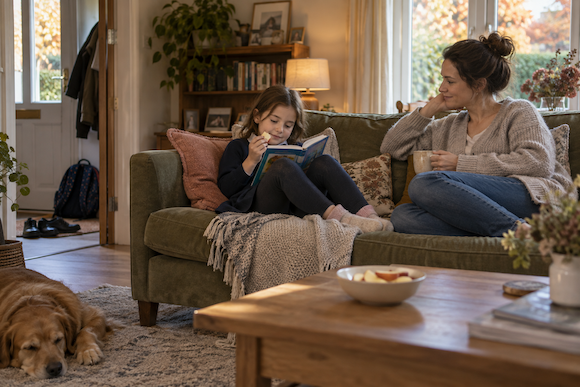
Your child holds it together all day, walks through the front door and suddenly everything is wrong. The snack is unacceptable, a sibling is breathing too loudly and a simple question about school produces tears or fury. This after-school collapse is common, particularly during the long autumn term.
Why home gets the difficult behaviour
School asks children to manage noise, instructions, friendships, transitions and self-control for hours at a time. Younger children and those with additional sensory, attention or communication needs may use almost all their reserves getting through the day. Home is the place where they finally feel safe enough to let go.
That does not mean every behaviour should be accepted. It does mean that connection and regulation usually need to come before questions, homework or consequences.
Try a low-demand first half-hour
Prepare a filling snack and drink before asking for conversation. Some children want quiet; others need movement, music, Lego, drawing or ten minutes bouncing on a trampoline. The aim is not to create a perfect routine but to reduce demands while their nervous system changes gear.
If 'How was school?' gets only 'fine', try waiting. Useful questions later include: 'What was the funniest thing today?', 'Who did you sit with?' or 'Was anything harder than you expected?' Children often talk more easily while walking, cooking or travelling than during direct eye contact.
Do screens help or make things worse
A familiar programme or game can provide genuine downtime, and an outright ban may create another battle. The difficulty comes when stopping is consistently explosive or screen time pushes food, movement, homework and sleep too late.
Try agreeing the stopping point before the device goes on: one episode, one match or a visible timer. For some families, a snack and ten minutes of connection before screens makes the eventual transition easier. Others find that screens work better after homework. Notice your own child's pattern rather than following a universal rule.
A simple decompression rhythm
A workable sequence might be: arrive home, put down belongings, eat and drink, have 20 to 30 minutes with few demands, then check what needs doing that evening. On busy club nights, expectations may need to be smaller still. Not every evening can include homework, exercise, family conversation, a bath and an early bedtime without everyone feeling rushed.
If distress is intense, happens most days, affects sleep or school attendance, or your child seems persistently anxious or low, speak to the class teacher or your GP. Otherwise, a calmer landing after school may be one of the simplest ways to improve the whole evening.